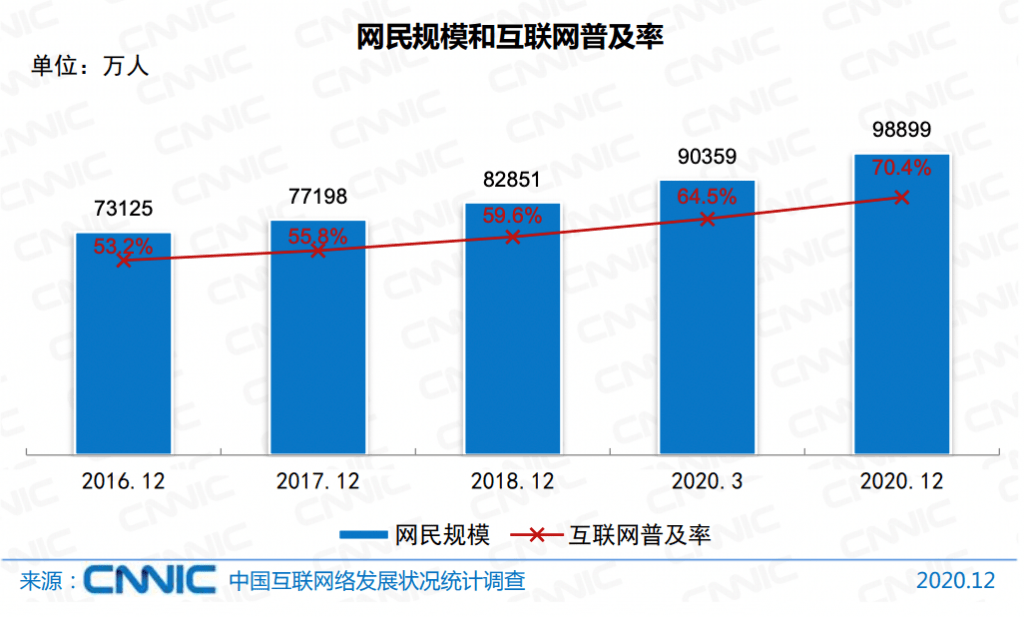
ON FEBRUARY 3, CHINA INTERNET NETWORK INFORMATION CENTER (CNNIC) RELEASED THE 47TH STATISTICAL REPORT ON THE DEVELOPMENT OF THE INTERNET IN CHINA, SHOWING THAT IN DECEMBER 2020, THE NUMBER OF INTERNET USERS IN CHINA REACHED 989 MILLION;
It grew by 85.4 million from March 2020, and the Internet penetration rate reached 70.4%, up 5.9 percentage points from March 2020. If we follow this growth rate, in the first half of 2021, the size of China's Internet users will exceed the 1 billion mark.
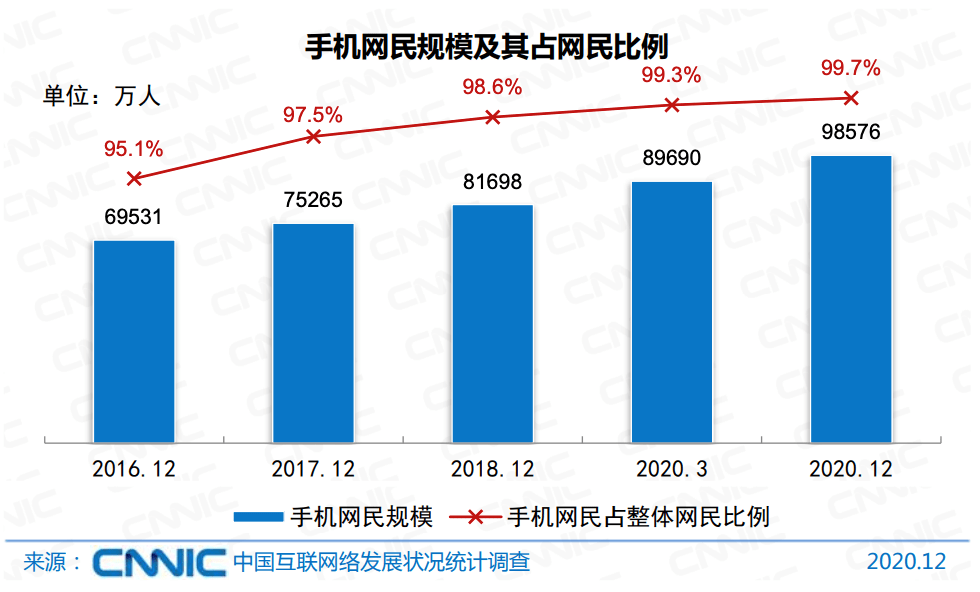
At the same time, the number of mobile Internet users reached 986 million, accounting for 99.7% of all Internet users. This is an increase of 88.85 million over the same period in 2020.
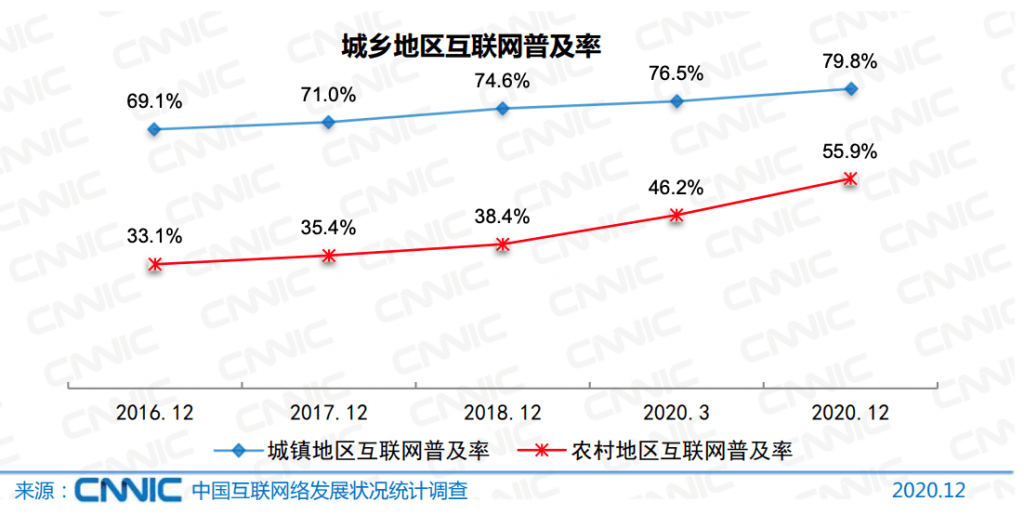
As of December 2020, China's Internet penetration rate in urban areas was 79.8%, and in rural areas it reached 55.9%;
This represents an increase of 9.7% compared to the same period in 2020. At the same time, Internet penetration in urban and rural areas combined narrowed by 6.4%.
Thus, the rapid development of the sinking market has brought a new wave of traffic to China's Internet market. The rapid development of the sinking market has brought a new wave of traffic to China's Internet market;
After the major Internet vendors focused on sinking the market, the age of Internet users has also changed significantly.
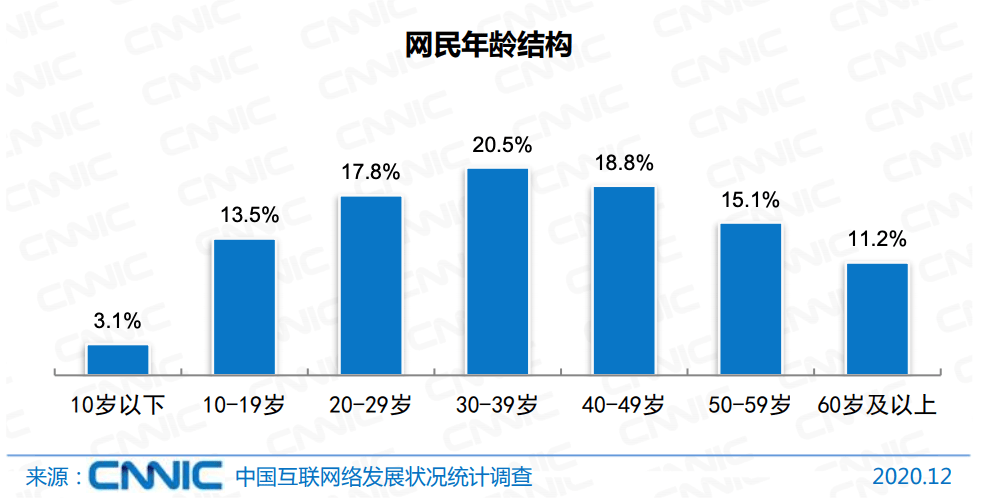
As of 2020 12 active, 20-29 years old, 30-39 years old, 40-49 years old Internet users accounted for 17.8%, 20.5% and 18.8% respectively, higher than other age groups.
The proportion of Internet users over 50 years old increased from 16.9% in March 2020 to 26.3%. The middle-aged and old-aged groups have further started to familiarize themselves with the Internet and become accustomed to it.
At the same time, the personal income of Internet users has also changed.
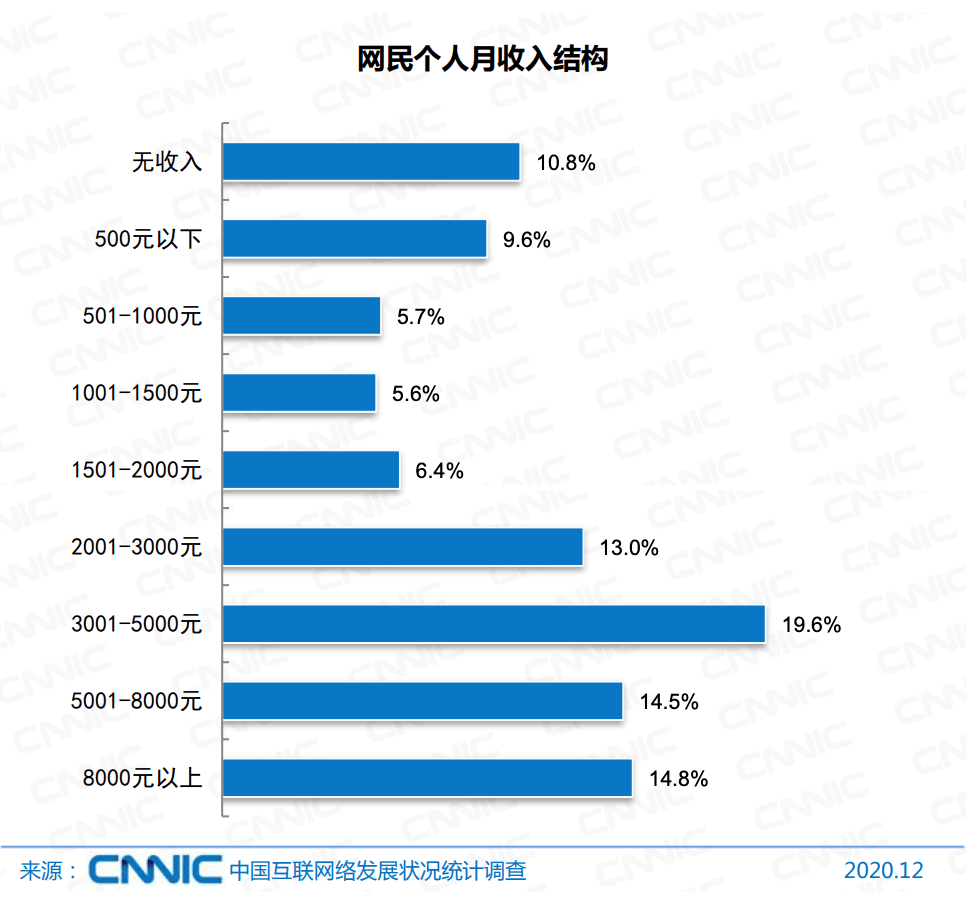
The proportion of Internet users with a monthly income of 2001-5,000 yuan is 32.7%; the proportion of Internet users with a monthly income of more than 5,000 yuan is 29.3%; and nearly 15% of Internet users have a monthly income of less than 1,000 yuan.
In summary, the Internet market has begun to sink, middle-aged and low-income. Internet marketing strategy also began to focus more and more on the differentiation of the crowd and the creation of brand persona.
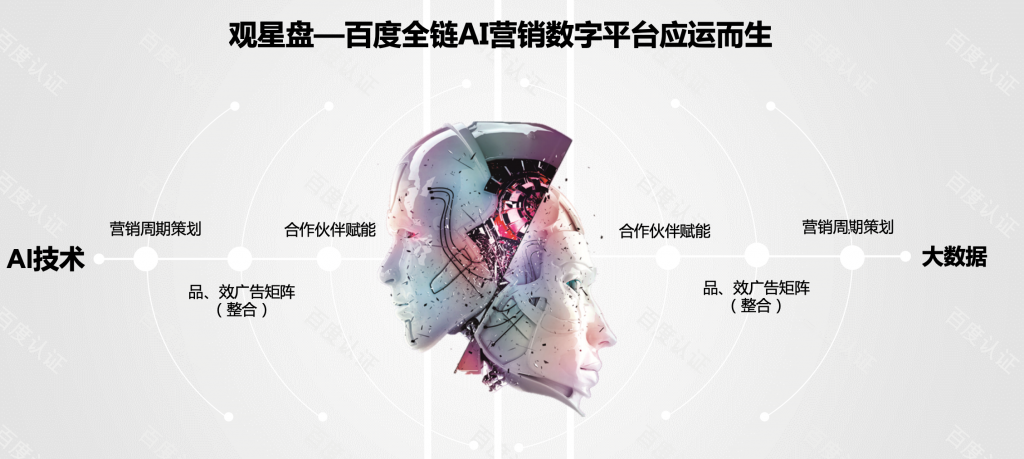
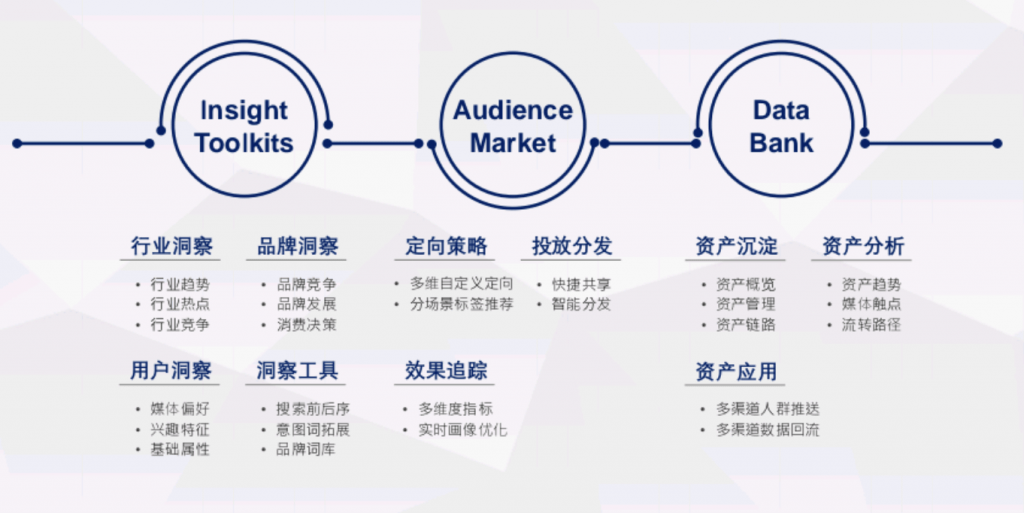
BAIDU STARGAZER IS BASED ON BAIDU'S AI TECHNOLOGY AND BIG DATA CAPABILITIES, AND CAN PROVIDE MULTI-DIMENSIONAL INSIGHTS INTO BRAND AND USER CHARACTERISTICS FOR DIFFERENT INDUSTRIES BEFORE PLACING ADS.
The target audience can be effectively and precisely targeted through the whole scene crowd strategy in the delivery.
After the launch, the whole chain of data assets can be deposited, analyzed and remarketed. Build brand integrated full-scene marketing, covering the whole life cycle of users.